Entering new markets with additive manufacturing
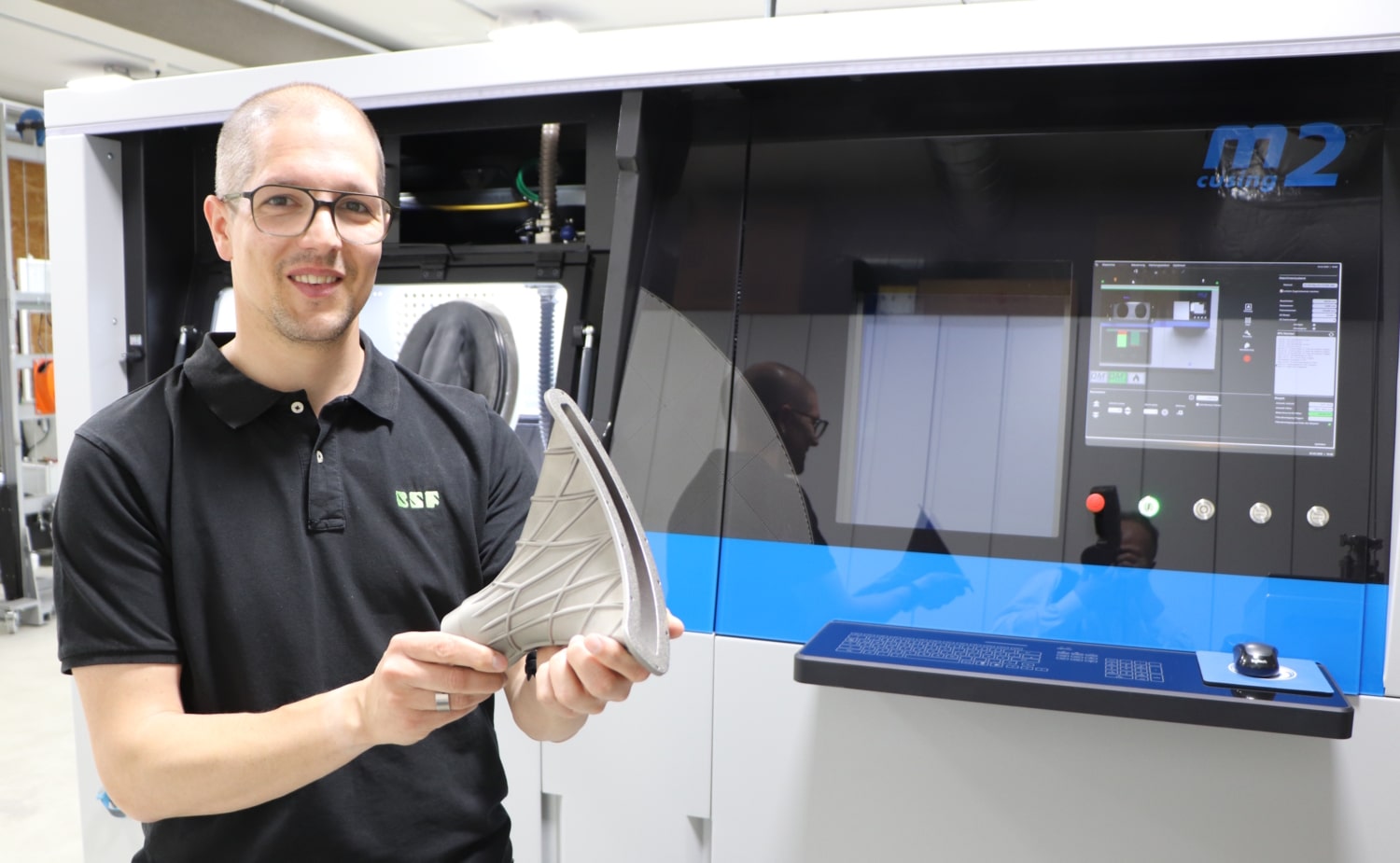
BSF Bünter AG in Heerbrugg, St. Gallen, invested in additive manufacturing at an early stage Manufacturing is investing in new, innovative production processes to be able to offer. The combination with conventional Processing methods are set to shape the future of the Secure the site.
The machine, which is about the size of a small machining centre, hums quietly away. In an inert gas atmosphere, laser beams continuously melt metal particles, building up layer by layer
for complex workpieces, layer by layer. Depending on their size, individual components or several at once are produced on a solid base plate – a process that can sometimes take several days. As early as 2012, BSF Bünter AG in Heerbrugg had begun using selective laser melting (SLM) as an additive manufacturing process. The traditional contract manufacturing company initially intended this primarily to meet the needs of the mould-making sector. Customers were found quickly, but capacity utilisation was low at the start, reports Managing Director and co-owner Fabian Graber.
One-third additive manufacturing
Soon after completing his degree in mechanical engineering at what was then the NTB in Buchs, the qualified design engineer began to focus even more intensively on the newly introduced manufacturing method from 2015 onwards. The number of orders doubled within a year. These initial successes motivated the company to further expand its plant and facilities. This was a risky decision during what was then a period of hype, but BSF Bünter AG had the right instinct: in the years that followed, SLM was to become the most widely used industrial process in additive metal manufacturing.
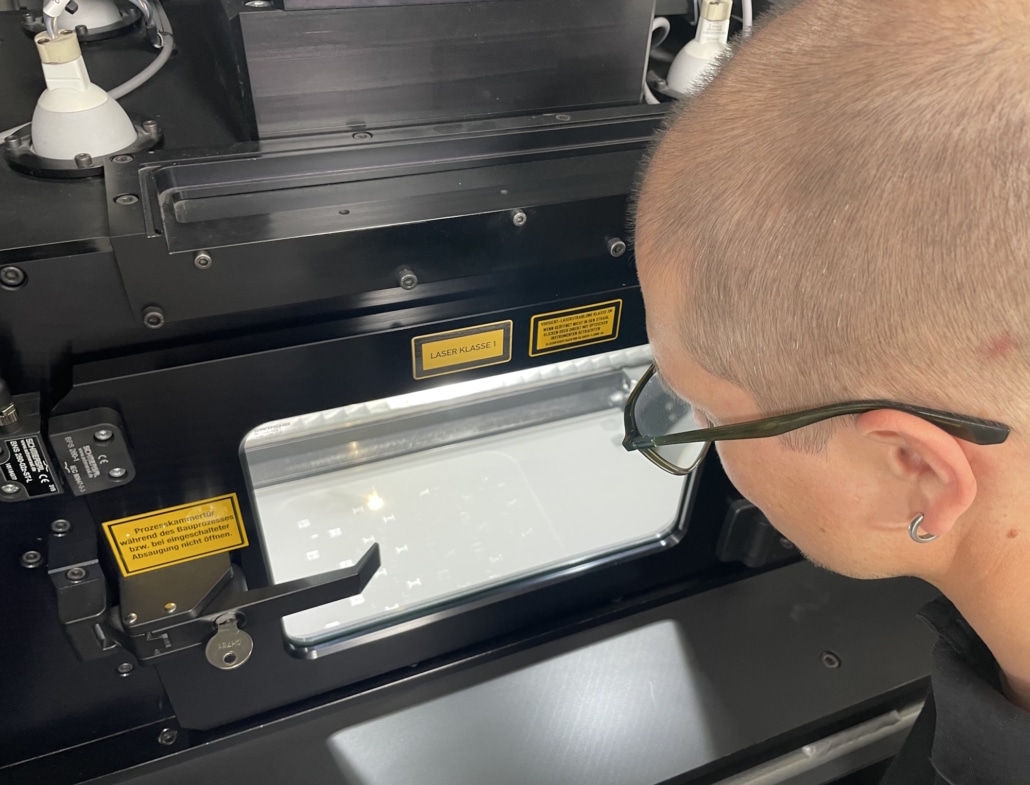
An insight into the additive manufacturing process: a laser beam melts the metal powder and builds up workpieces layer by layer.
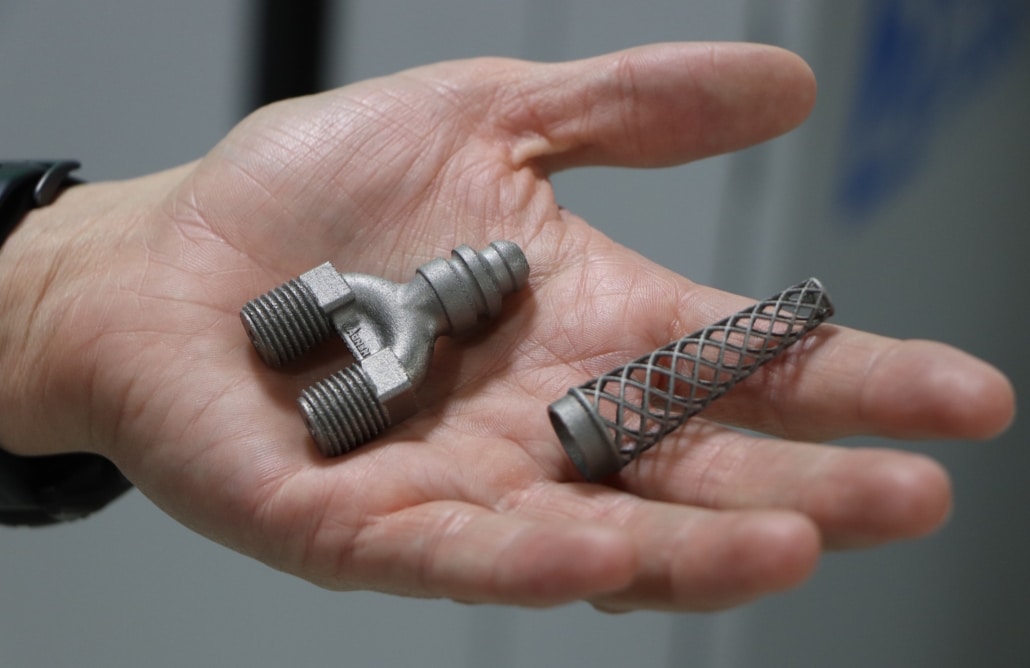
BSF Bünter AG primarily uses additive manufacturing to produce small and complex workpieces.
More cost-effective for ducts and cooling fins
BSF Bünter AG uses additive manufacturing primarily for small and complex components in small-batch production. The managing director explains that cooling channels that closely follow the contours of workpieces for injection mould construction can be produced more cost-effectively than with conventional methods – and he knows exactly what he is talking about, having explored this very subject in depth in his final thesis at NTB.
A valve block for colour printers is another example of its application. Instead of machining an entire block using conventional methods, the additive process forms tubes with the desired curvature. In the manufacture of a heat exchanger, on the other hand, cooling fins are created by melting the metal powder layer by layer, and cooling channels are built up at the same time if required.
The best and most affordable solutions find
«If the same alloys are used, the workpieces exhibit almost the same strength as conventionally manufactured components,» explains Fabian Graber. To address any shortcomings regarding
To compensate for the continuous load, the wall thicknesses could be increased locally as required. Throughput and production times, as well as the specified requirements for surfaces, appearance and threads, all played a role in selecting the optimal process. The decisive factors are always the costs and, above all, the aim of finding the best solution for the customers. It is also
There have been instances where clients have switched from additive manufacturing to conventional milling – or vice versa.
A niche with a future in Switzerland
In the field of additive manufacturing, the company now serves customers from all over Switzerland, as well as from around the world – including companies from Mexico and the Czech Republic right through to China.
Initially, demand came primarily from the mechanical engineering sector, followed by customers from the semiconductor, mould-making and aerospace industries.
Fabian Graber makes it clear that combining conventional, subtractive manufacturing with additive processes is part of the recipe for success. The managing director sees opportunities for market growth in improved CAD software. The aim, he says, is to identify more ideas and more possibilities for additive manufacturing. The company, founded in 1984 by Josef Bünter, is therefore confident that it is further developing a specialised niche that also has a future in Switzerland. BSF Bünter AG primarily uses additive manufacturing to produce small and complex workpieces.
(Photographs and text: Martin Sinzig)


